

Lion's Mane Filet Mignon 🍄 tender, vegan mushroom steak

Lion’s mane ‘filet mignon’ with spinach, tomatoes, shallot and new potatoes. Serving suggestion.
Lion's Mane Filet Mignon 🍄 tender, vegan mushroom steak
This is my second lion’s mane mushroom steak. Previously I made a steak flavoured with a red wine broth. This new recipe uses a completely different broth, plus some extra tricks to elevate the steak even further.
More tender
By adding a teaspoon of baking soda (not to be confused with baking powder) to the broth that we use to rehydrate the dried lion’s mane, we can further tenderise the mushroom to reduce its natural chewiness. Half way through rehydration, I also poke the centre of the mushroom a few times with a fork to let the broth penetrate the mushroom and soften the core, which is the most ‘gristly’ part.
Coconut cream marbling (optional)
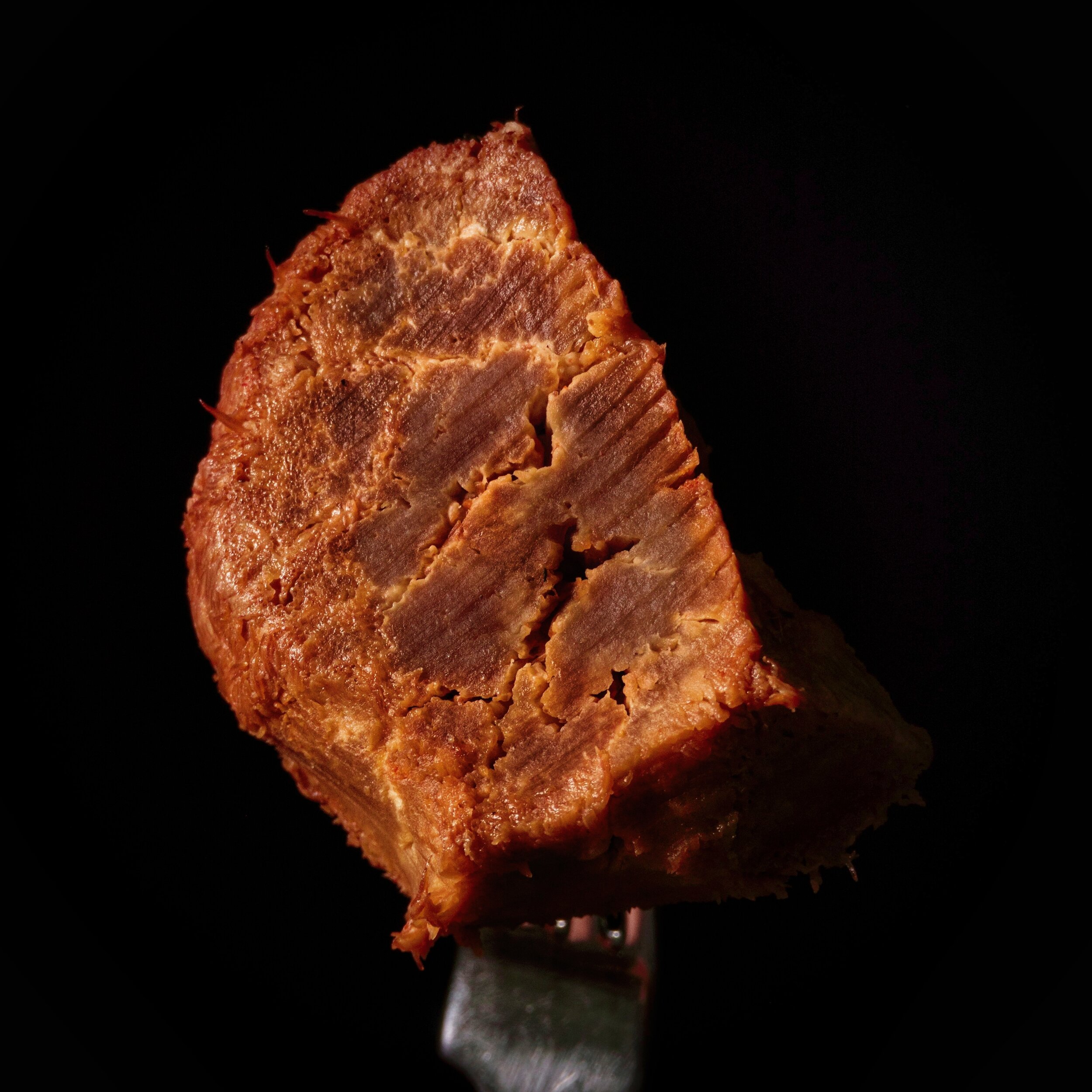
I also add veins of coconut cream to the mushroom to introduce another texture and flavour to the experience. Although it’s quite a simple addition, it adds time and ingredients that some may wish to skip. As such I’ve made this step optional in the recipe.
About the lion’s mane mushroom
The lion’s mane or Hericium erinaceus is a spectacular shroom when fresh, looking indeed like the white mane of some ghost lion. It’s touted for its medicinal qualities but it is also a gastronomic delight. Its flavour is has been likened to lobster, but when we’re done with it it won’t be fishy at all.
For our purposes we’re using the dried, whole mushroom, which is considerably smaller and lighter to begin with. I ordered a big jar of these online from Germany as I haven’t yet found a supplier in Belgium, where I live.
Recipe: Lion's Mane Filet Mignon 🍄 tender, vegan mushroom steak
This recipe is for 3 lion’s mane steaks. The potatoes, spinach and tomatoes are a serving suggestion, not included in the recipe.
All measurements are level, using standardised measuring spoons and cups. Be precise!
Requirements
Small but fairly deep cooking pot with lid
A food processor or blender
A fine-mesh sieve
colander
Ingredients
Coconut cream marbling (optional)
⅓ cup coconut cream or Alpro soy cream
2 tsp neutral-tasting veg oil I e.g. groundnut oil
¼ cup water | cold or room temperature
¼ cup + 2 tsp corn starch | aka corn flour in the UK
2 tsp tapioca starch | aka tapioca flour
Broth
4 medium carrots | washed, top removed, roughly chopped
a thumb of ginger | unpeeled, chopped into discs
1 small, raw beetroot | washed, topped and tailed, skin left on, roughly chopped
1 big bay leaf
½ tsp smoked paprika
½ tsp sea salt
1 tsp baking soda | aka bicarbonate of soda
freshly ground black pepper | about five grinds
Remaining ingredients
3 large, dehydrated lion’s mane mushrooms | whole
3 shallots | peeled, left whole and intact but with roots removed
3 whole garlic cloves, peeled, and a few stalks of fresh rosemary and thyme
Instructions
Optional: if you’re going to do the coconut cream marbling, whisk those ingredients together now and set aside. (Whisk again briefly before using.)
Let’s make the broth to rehydrate the mushrooms.
Prepare the carrots, ginger and beetroot as described above and throw them in your food processor. Gradually add one cup of water, blending everything for about a minute to create a thick smoothie. Then add an additional three cups of water (so that’s about a litre of water in total) and blend again.Strain this vegetable smoothie mix through a fine mesh sieve into a small, deep saucepot and add the baking soda, bay leaf, smoked paprika, salt and black pepper.
Add your mushrooms to the broth (with the ‘hairs’ facing up) and bring to a low boil (keep an eye on it!). Then reduce to a simmer on the lowest heat and place the lid on top, leaving it open a crack. Set a timer for 15 minutes.
After 15 minutes has passed, remove the mushrooms and, using a small, sharp knife, poke holes all over them – but especially in the tough centres. Now put them back in the pot (upside-down), together with the shallots, for another 15 minutes.
Turn off the heat. Remove the shallots and set aside. Remove the mushrooms and squeeze out the excess broth. (I put them in a colander over the sink and squeeze them down firmly with a metal or heatproof-glass bowl.) Let them cool off for a couple of minutes. Note: don’t throw away the broth yet.
Optional: if you’re doing the marbling, then, using a fork, tease apart the layers of the mushrooms (the ‘hairs’) a little. We want to deepen these creases to make some channels for the cream to enter into. The mushroom should remain intact. Then spoon some of the cream over each shroom and massage it into the creases. Blot off the excess cream from the surface of the shrooms by pressing down on them firmly with paper towels or a clean cloth. The cream should only be in the cracks — otherwise you’ll get a doughy layer on top when you sear the shrooms.
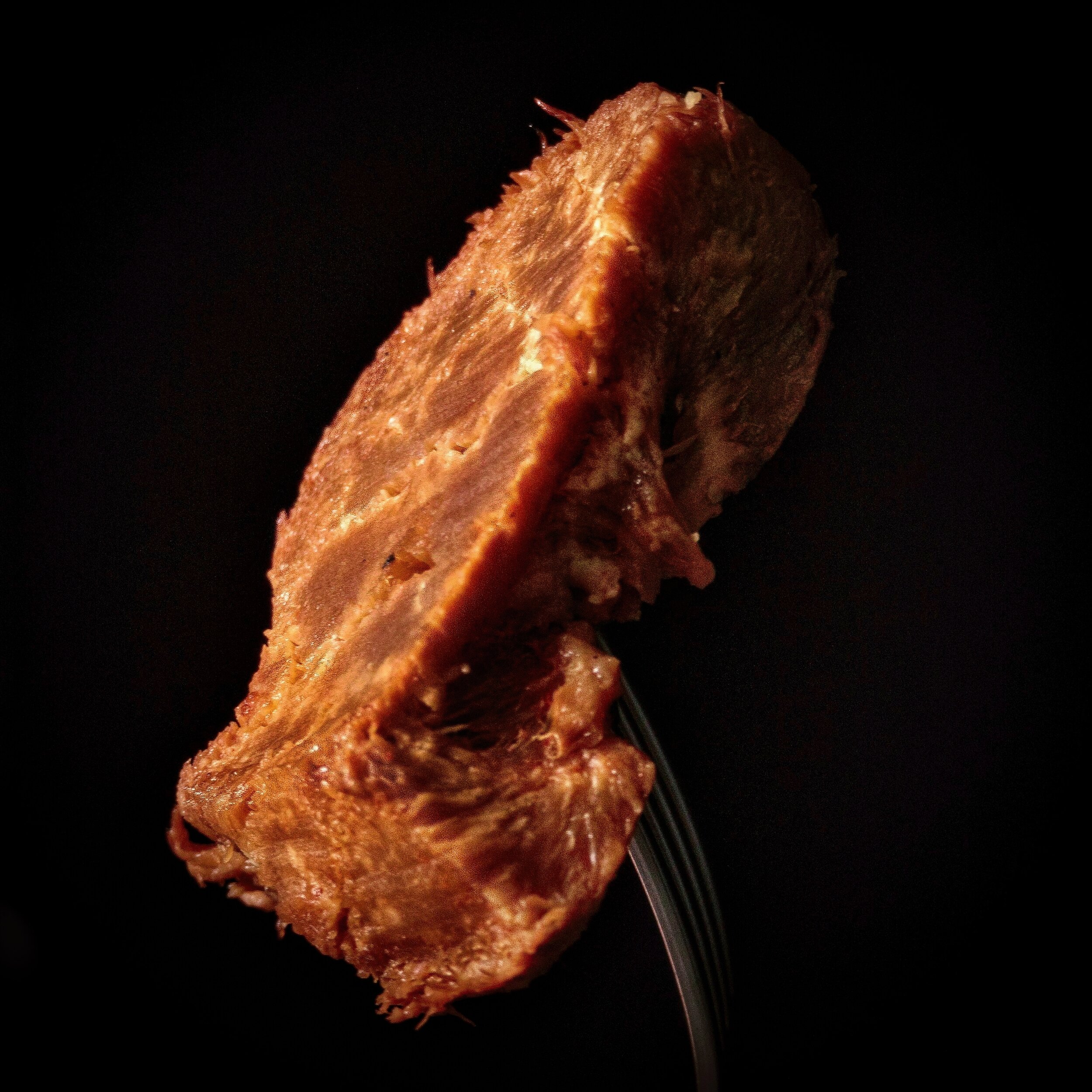
Add a tablespoon or two of olive oil to a skillet and bring it to a medium-high heat. Add the fresh rosemary, thyme, whole garlic cloves and the mushrooms (season with salt and pepper to taste). Sear the mushrooms on both sides. Once both sides are nicely browned, add a good splash of the remaining broth and let the flavours of the aromatics infuse with the steaks for a minute before serving.
Serve the steaks with the shallots and any other accompaniments you like.
Tips 💡
If you decided to do the coconut marbling and have leftover batter, you can use it to make savoury pancakes. Pour some batter into a lightly oiled skillet and cook the pancakes on a medium heat until crispy.
Put the leftover vegetable pulp from the broth into a tupperware and store in the freezer. It can be added to other vegetable scraps to make vegetable stock at a later date.


